Heat source dimensioning
Revision as of 12:30, 14 December 2022 by Klintsevicho (talk | contribs) (→Heating installations with)
| Product | InstalSystem 5 |
| Type of article | TIP&TRICK |
| Source for translation | 2020-04-05 |
Problem description
The way in which the heat source is dimensioned depends on the type of designed installation.
Solution
Heating installations without Flat stations
The heat source dimensioning depends on the Method of calculating Φ specified in the General data window

The following values should be taken into account:
- Design heat load of building – in the case when thermal calculations of a building based on Calculations acc. to standard
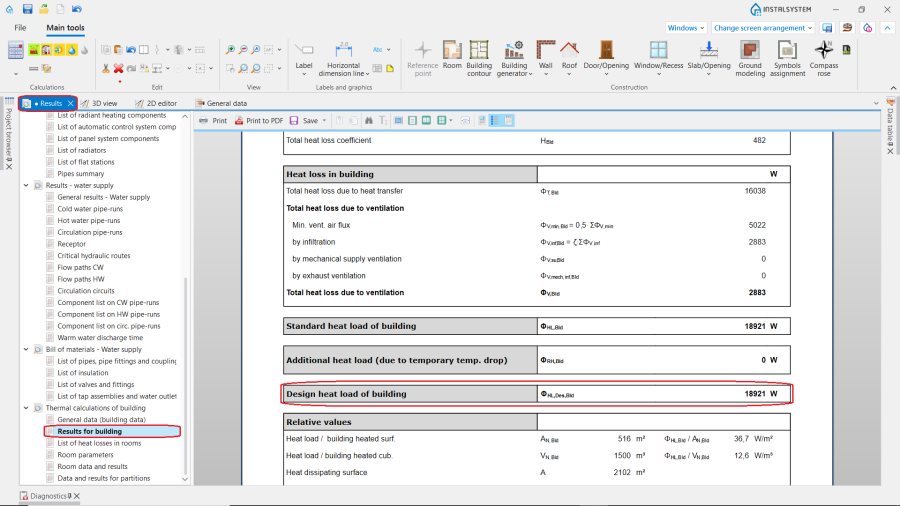
2. Design heat load of building. - the total value of: Spec. total rooms heat loss ΦH, Not utilized heat loss of pipe-runs and Losses of radiant systems to outside of source feed area - in the case when thermal calculations of a building based on Calculated acc. to coefficient or User specified

3. Spec. total rooms heat loss ΦH.


Heating installations with Flat stations
For the installations with Flat stations there are two variants for a heat source dimensioning in the heating period:
- If the heat source lacks a buffer tank - heat source dimensioning should adopt the Total output value.
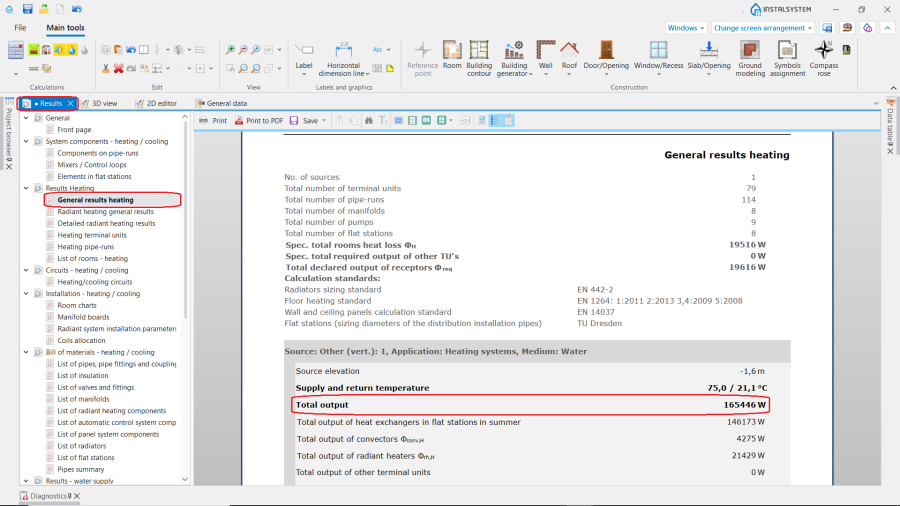
5. Total output. - If the heat source includes a buffer tank - the indicated Total output value is the peak power that the buffer tank is supposed to deliver to the installation. We suggest that the heat source be dimensioned towards standard heat load of a building (or in case there are no norm calculations, towards total heat load of rooms) including not utilized heat loss of pipe-runs and losses of radiant systems to outside of source feed area.
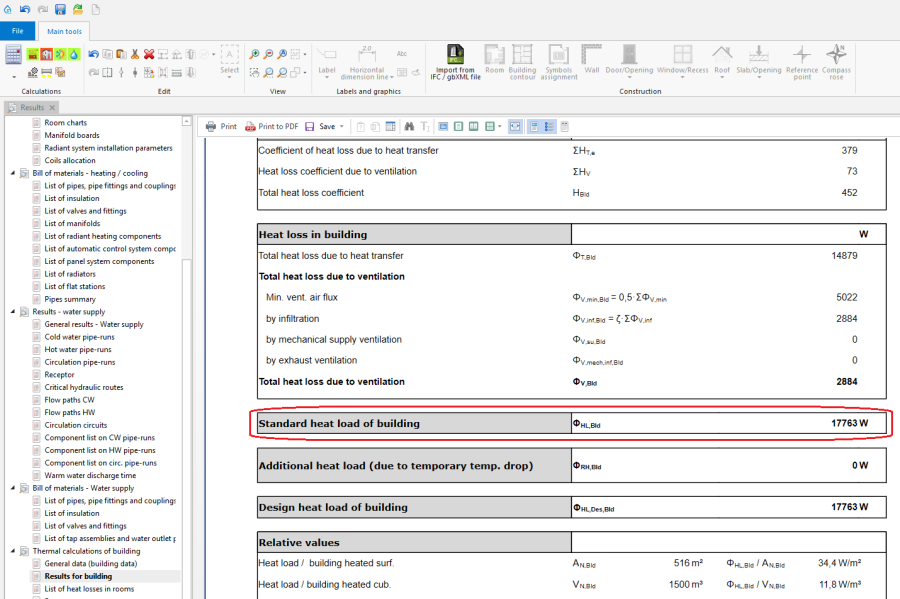
2. Standard heat load of building. 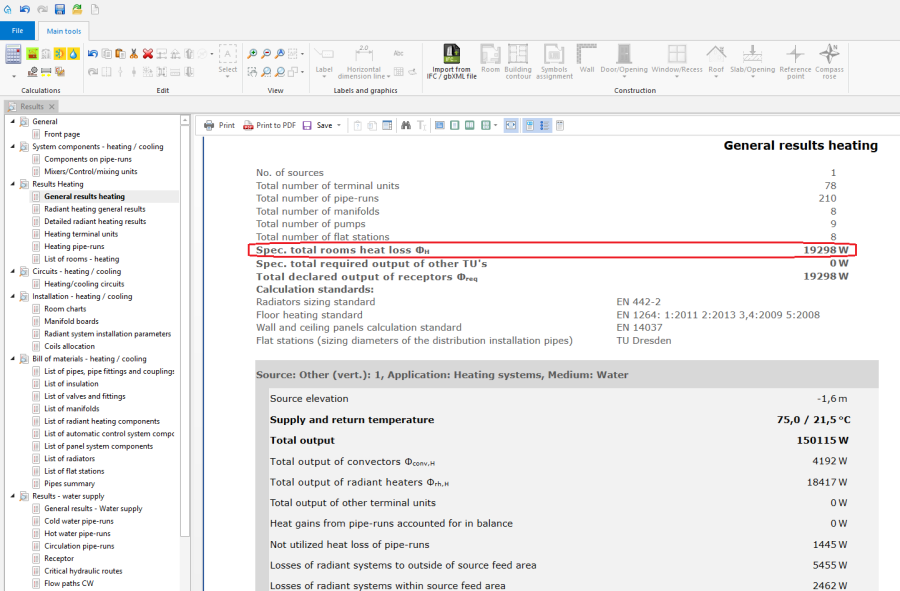
3. Total rooms heat value. 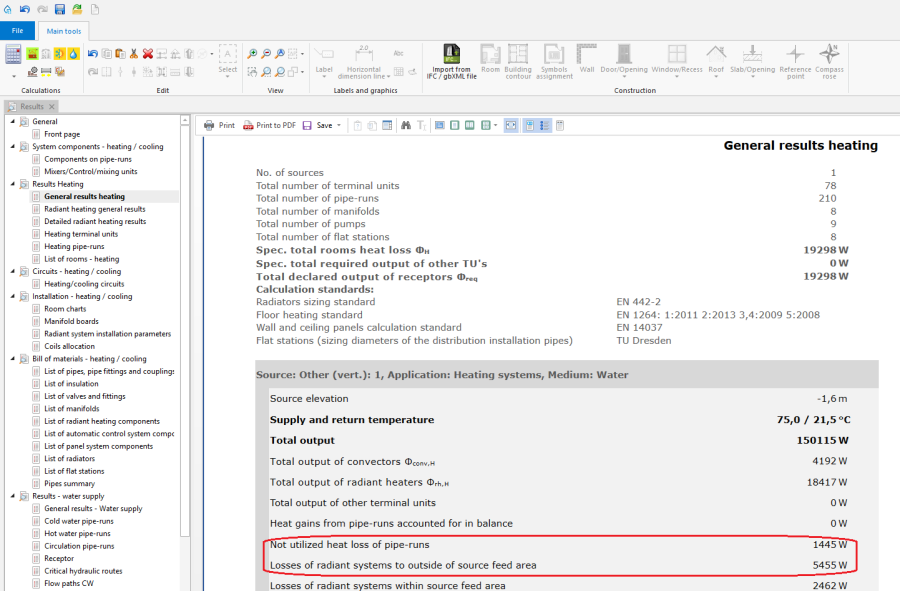
4. Heat loss of pipe-runs, losses of radiant systems.


